September 15, 2026
Walk into any timber merchant in Britain and three names come up for furniture work: pine, oak and ash. They sit at different points on the price ladder, behave differently under a plane, and age in ways that suit different rooms and budgets. None of them is the best wood in the abstract. One of them is almost certainly right for the job on your bench.
The short answer
Pine for painted and budget work. Oak for surfaces that take a beating and pieces meant to be looked at. Ash for anything that has to flex, bend or carry load without looking heavy.
- Pine is soft, cheap and available everywhere. It dents easily, which matters a great deal on a dining table and not at all on a painted wardrobe.
- Oak is the default British hardwood for furniture: hard, durable, superb under an oil finish, and capable of lasting a lifetime if you design for movement.
- Ash is the one people forget. It has much of oak's strength and shock resistance, a paler and more open grain, and it steam-bends better than either of the others.
Cost and availability
Pine is the cheapest of the three by a comfortable margin and the easiest to buy. It arrives as planed-all-round redwood and whitewood from builders' merchants, as construction-grade timber for workshop furniture, and as cleaner joinery stock from specialist suppliers. That last distinction matters. A workbench or a shed shelf will happily swallow knotty construction pine. A hall table that will sit in daylight wants boards with tighter knots and less resin, and you pay for that.
Oak is the mid-to-upper option. European oak is widely stocked in boards, and American white oak is a common substitute with a slightly cooler tone. Ash has been trickier to source in recent years because of ash dieback, so boards come and go. When good ash is in stock it often lands in a similar bracket to oak, sometimes a little under it.
A useful rule: spend money on wood you are going to look at, and save it on wood you are going to paint. Put the difference into hinges, drawer runners and a decent finish.
Hardness and how each timber wears
Pine is soft, and it shows. A dropped mug, a rolled screwdriver, a chair leg dragged across the floor: all of them leave marks. Shallow bruises can sometimes be lifted with a damp cloth and a warm iron, but deep dents stay. Knots are harder than the surrounding wood, so pine wears unevenly, which is part of its charm in a cottage kitchen and a nuisance on a desk top.
Oak and ash both shrug off everyday knocks. Oak resists dents and takes scrubbing, which is why it suits table tops and kitchen surfaces. Ash is the shock-resistant one: it flexes before it breaks, which is exactly what you want in chair legs, stretchers, spindles and tool handles. If a joint is going to be leaned on or a leg is going to be kicked, ash is forgiving in a way pine simply is not.
One oak quirk worth knowing before you buy: tannins. Wet oak in contact with steel leaves black stains. Use stainless or brass screws where dampness might reach, keep steel wool away from unfinished oak, and don't rest a wet plane on a bare oak top.
Workability at the bench
Pine
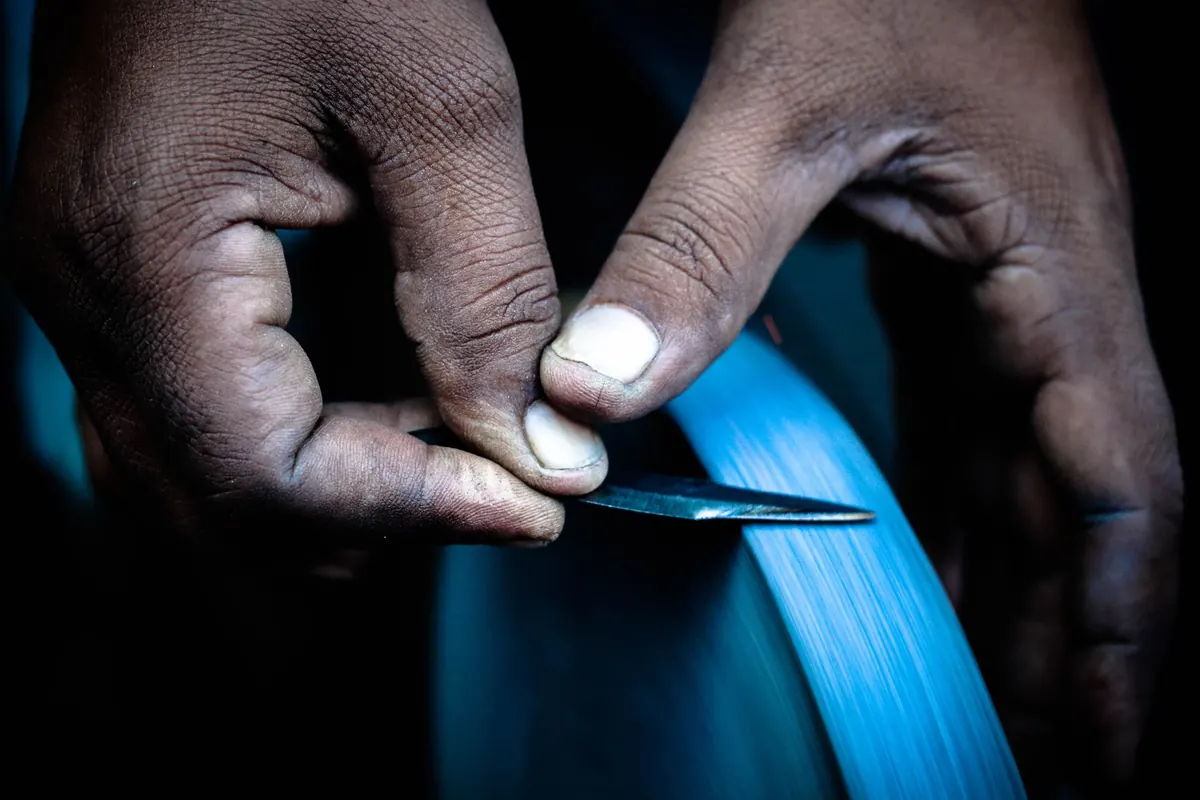
Sharp tools and light cuts. Pine planes quickly but crushes if you get greedy, and knots tear out unless your blade is genuinely sharp. Resin gums up saw blades and clogs abrasives, so clean them. Screws hold well enough for light work, but pilot holes are essential in narrow sections to stop splitting. Sanding needs a light touch too; it is easy to dish the surface around a hard knot.
Oak
Heavier going. Oak blunts edge tools faster than pine and punishes a dull chisel. Wavy or interlocked grain can tear out, so take finer passes and read the grain direction before planing. The rewards are crisp joinery, edges that hold their shape, and the ray fleck you get on quarter-sawn boards. Break sharp arrises before finishing; oak splinters are unpleasant.
Ash
Usually straight-grained, strong and pleasant to work, though it also takes the edge off tools. Being ring-porous, its end grain is coarse and drinks finish like a sponge. Where ash really earns its place is bending: steamed or laminated around a former, it holds a curve with less springback than most hardwoods, which is why so many classic chair designs rely on it.
Movement and stability
Every timber moves as humidity changes. The question is how much, and whether your design gives it somewhere to go. Pine moves most of the three, particularly wide flat-sawn boards and fast-grown stock, which can twist and cup as it settles. Oak is generally the steadiest once properly dried, with ash somewhere in between but still capable of moving enough to crack a top that has been fixed rigidly.
- Buy kiln-dried stock, in the region of 8 to 10 per cent moisture content for furniture that lives in a heated home.
- Let boards acclimatise in the workshop for a week or two before milling.
- Mill in stages: rough cut, leave overnight, then bring to final dimension.
- Fix tops with buttons, figure-eight fasteners or slotted holes. Never glue a wide top solidly to a frame.
- Finish both faces, especially on table tops. An unbalanced finish pulls the board as it dries.
Finishing
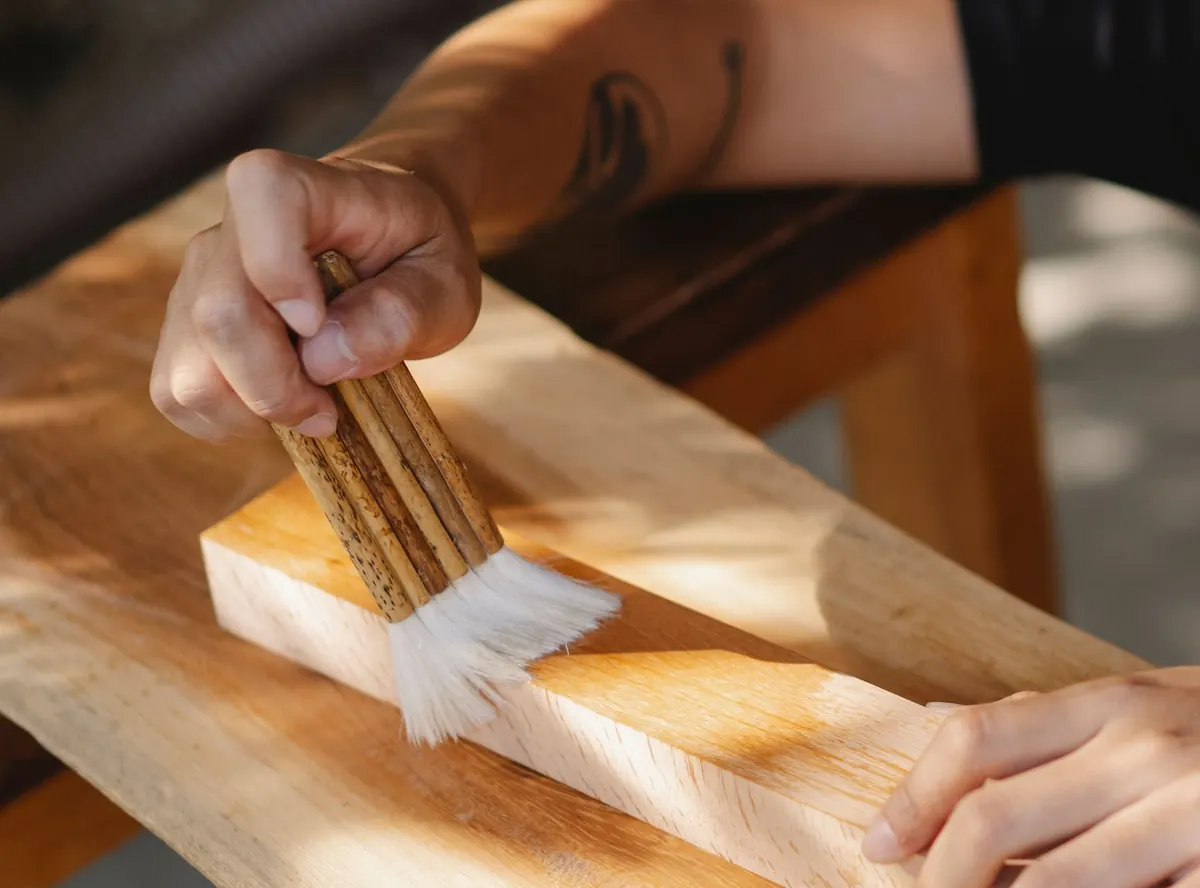
Pine is the fussiest of the three to finish well, mostly because it goes blotchy. Seal the knots with shellac knotting or a shellac-based sealer to stop resin bleeding through paint, then use a sanding sealer or a thinned first coat to even out absorption. Always test on an offcut. Oil and wax give pine a honey colour that deepens with age; paint hides the dents, the knots and the uneven colour, which is no bad thing.
Oak and oil are made for each other. Its open grain drinks finish, so expect to use more than you think, and grain filler is worth the effort if you want a smooth, closed surface rather than visible texture. Watch the tannins again: some water-based finishes react with them, and a shellac barrier coat settles the argument.
Ash is pale with a bold cathedral grain. Oil warms it to amber and brings out the figure; water-based clear coats keep it light but can look a little flat on such an open-grained wood. Fill the grain if you want a mirror finish, and accept a gentle yellowing over time.
Choosing in the timber yard
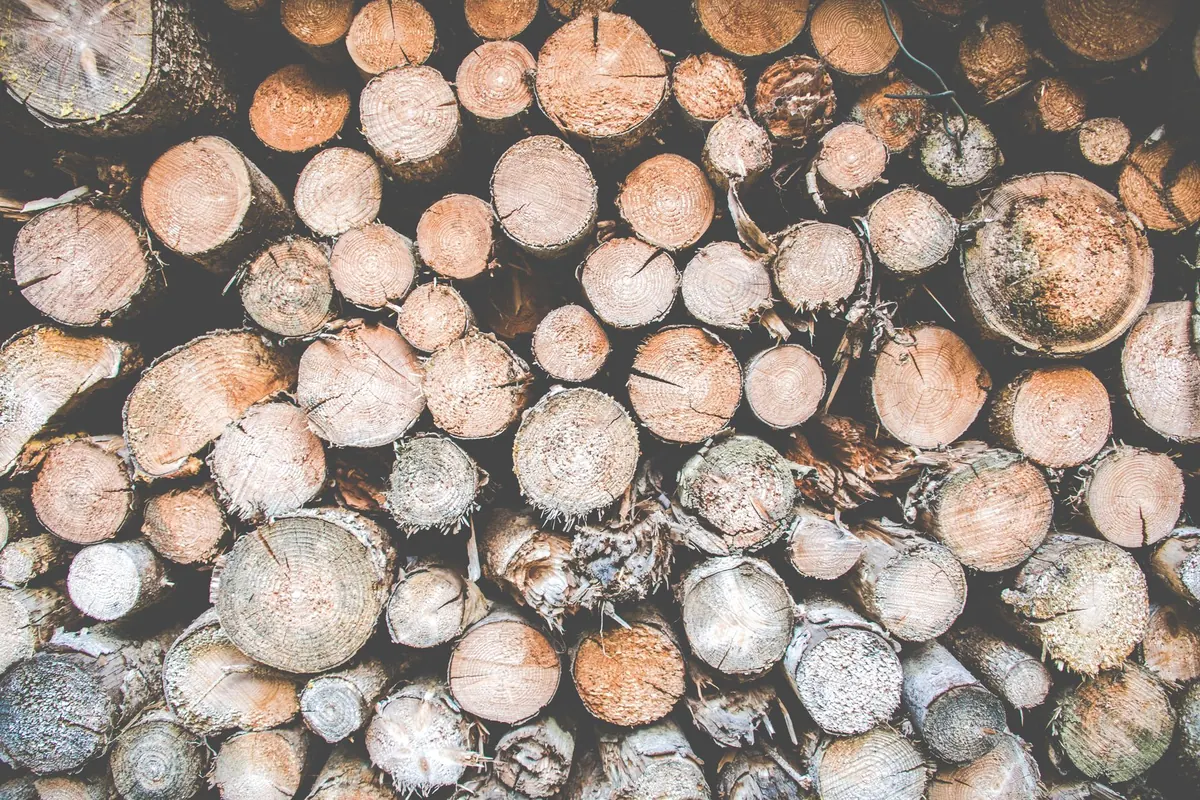
Pick your own boards if the merchant lets you. Reject anything bowed, twisted or badly cupped, and look for straight grain along rails and stiles. Check oak for surface checks and pine for loose knots, blue stain and splits. Buy ten to fifteen per cent more than your cutting list needs, from the same batch, so you have matching stock for a repair later. Store it flat, on stickers, off the floor.
Then match the timber to the job. Painted furniture, built-ins and drawer boxes: pine, and put the savings into hardware. Dining tables, worktops and anything that will be seen and touched daily: oak. Chairs, bent laminations and pieces that need to be light but strong: ash. Buy one board more than you need, and you will rarely regret it.
Photo: cottonbro studio / Pexels